Medical coverage in nursing homes: what good looks like
Whether you run an aged-care facility or are choosing one for a parent, the quality of medical coverage matters as much as the rooms and the food. Here's what strong coverage includes — and the questions worth asking.
Key takeaways
- Good coverage is more than a doctor on paper — it's scheduled rounds, reachable after-hours support, and clear documentation.
- The single biggest quality marker is whether residents can be assessed and treated in place rather than sent to A&E by default.
- Families choosing a facility should ask specific questions about who attends, how fast, and what happens at 2am.
- Operators can add this capacity through a visiting medical officer partnership rather than hiring full-time.
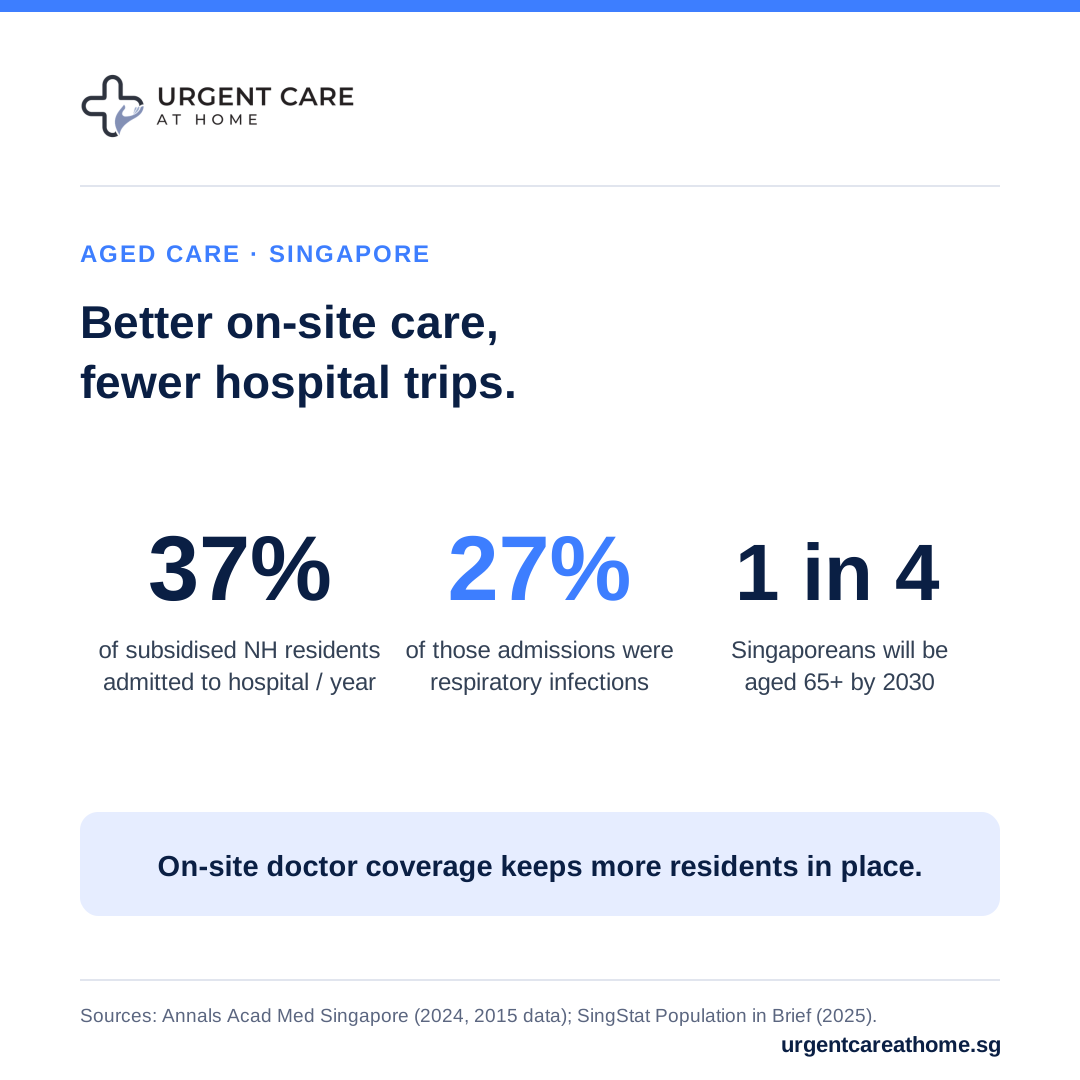
Why medical coverage matters
Residents of nursing homes and assisted-living facilities are, by definition, older and frailer, often with several long-term conditions. Their health changes more quickly and less predictably than most. Without timely medical input, the safe default when something changes is to call an ambulance — and every avoidable transfer is distressing for the resident, disruptive for the family, and costly for the system.
What strong coverage includes
- Scheduled visiting rounds — a doctor who reviews residents regularly, manages chronic conditions and assesses new arrivals, so problems are caught early.
- After-hours response — a doctor reachable at night and on weekends, when most unplanned events happen.
- In-place assessment and treatment — the ability to examine, treat and prescribe on site, including injectable medication, so transfer is a considered decision rather than a reflex.
- Clear documentation and handover — proper notes for the facility's records and structured handover to hospital teams or family doctors when needed.
- Family communication — someone who updates families clearly when a resident's health changes.
The transfer question
An emergency-medicine-led team is particularly well placed to make the call on transfers: trained to tell the resident who genuinely needs hospital from the one who can be safely managed in place. That judgement — made at the bedside, not over the phone — is where good coverage earns its keep. We explore how illness presents in older adults in recognising emergencies in older adults.
Questions families should ask a facility
Who provides the medical coverage, and are they specialists or GPs? How often does a doctor visit? What happens if my parent becomes unwell at night — does a doctor attend, or is it straight to A&E? How are families kept informed? Is there a named clinical contact?
For operators
Building this capacity in-house is expensive and hard to staff around the clock. A visiting medical officer partnership adds doctor coverage — scheduled rounds plus after-hours response — for a predictable retainer, working alongside your existing nursing team. See how we work with facilities on our aged-care partnership page.
